Every believer is at war not with the world outside, but with the nafs within. Sometimes, we rise victorious, and in those moments, we taste the sweetness of īmān: tranquility, lightness of the heart, and closeness to our Creator.
But other times… we slip.
We fall into public and private sins that shatter our self-image, crush our souls, and whisper in our ears that we are the worst sinners alive. The endless cycle of temptation, sin, regret, and remorse leaves us in despair, asking ourselves:
“Why do I keep falling? What’s wrong with me?”
Ibn al-Qiyyam once wrote:
“There is nothing more beloved to Shayṭan than the sadness of a believer.”
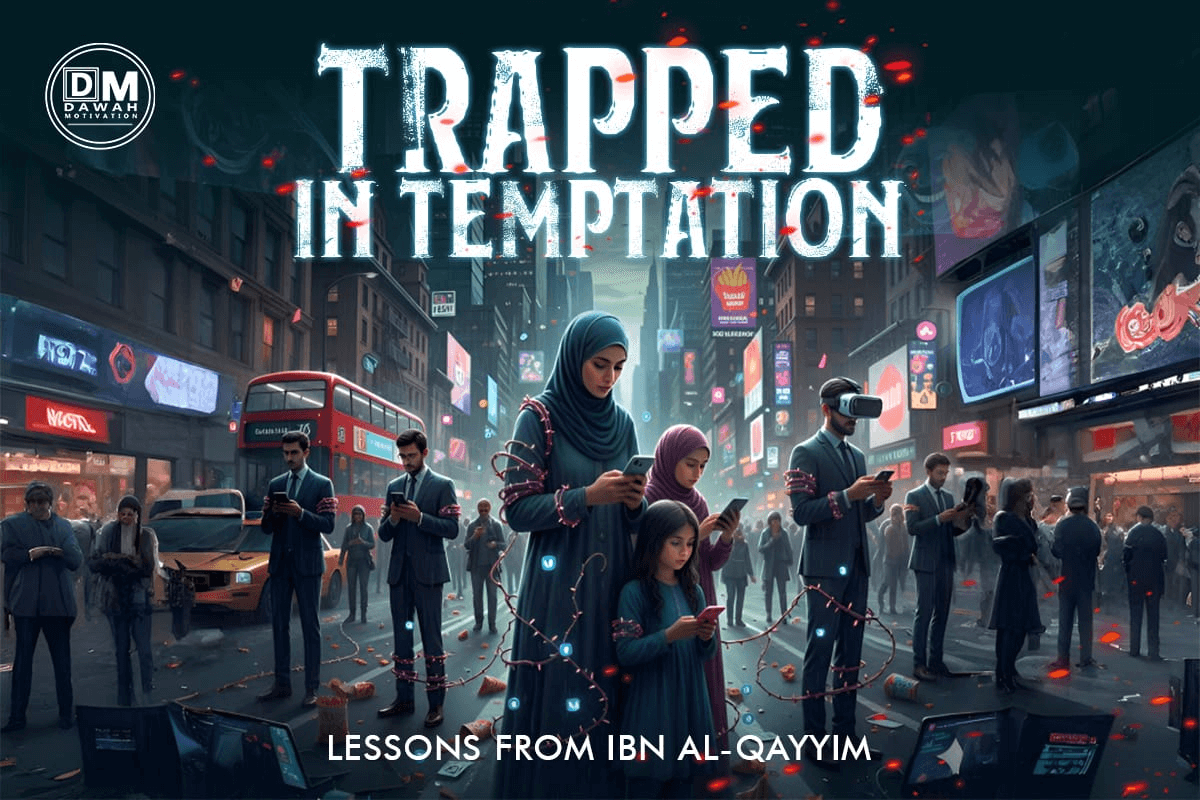
And that’s the truth. In today’s world, Shayṭan has surrounded us with traps at every corner, making sin not only easy but dangerously unavoidable. Below are some of the biggest pitfalls we face and timeless insights from Ibn al-Qayyim on how they corrupt the heart.
1. Easy Accessibility — Sins at Your Doorstep
With just a click, substances like cigarettes, drugs, and toxic pills are delivered straight to our doors. Nobody asks about your age, your pain, or your state of mind. No one cares whether you’re 13 or 30, broken or healthy. All they care about is profit even if it destroys families and wrecks souls.
Allah warns us:
“They have purchased the life of this world at the price of the Hereafter.”
(Surah al-Baqarah 2:86)
The dopamine rush becomes the bait, and Shayṭan whispers:
“Just once… no one will know.”
But the soul knows. The heart knows. And Allah always knows.
2. Hypersexualized Media — Poison Through the Eyes
We live in an age where Netflix, TikTok, and Instagram constantly flood us with indecency. Even if we’re not searching for it, it finds us shaping our thoughts, corrupting our desires, and dulling our sense of modesty.
Pornography in particular has become a silent epidemic. Studies confirm what Ibn al-Qayyim pointed out centuries ago: it rewires the heart. It distorts dopamine pathways, kills motivation, weakens relationships, and leaves people trapped in cycles of shame and numbness.
Ibn al-Qayyim wrote:
“The gaze is the poisoned arrow of Shayṭan. Whoever lowers his gaze for the sake of Allah, He will grant him the sweetness of faith.”
And elsewhere:
“The eye is the messenger of the heart. If the eye is corrupted, the heart follows.”
What we consume visually doesn’t just stay on the screen. It carves itself into the soul, creating distance from Allah and silencing the Qur’an in our lives.
3. Unhealthy Interactions — When Harmless Turns Harmful
Social media has made interaction with the opposite gender effortless. What starts as a harmless reply to a story or a casual compliment can spiral into emotional attachment, secret chats, and shared photos.
Soon, that “friendship” becomes toxic leading to heartbreak, blackmail, or shame that feels impossible to escape.
Ibn al-Qayyim warned:
“Excessive speech, even if not sinful, darkens the heart. The more one indulges, the further the heart drifts from Allah.”
4. Corrupt Literature — Poison Disguised as Romance
Many young people today are hooked on novels filled with romance, lust, and shameless portrayals of relationships. Wrapped in captivating plots and relatable characters, these books normalize zina, obsession, and lust-driven love. What feels like harmless entertainment slowly poisons the heart, weakens ḥaya’ (modesty), and lowers moral standards until disobedience begins to feel “normal.”
The Prophet said:
“Modesty is part of faith, and faith is in Paradise. Obscenity is part of hardness of the heart, and hardness of the heart is in the Hellfire.”
(Ahmad, Tirmidhi)
Ibn al-Qayyim explained:
“The heart becomes addicted to what it regularly reflects upon. If it reflects on lust and desire, it becomes a slave to it.”
The heart is like a sponge it absorbs what it’s fed. Feed it shamelessness, and it becomes diseased. Feed it Qur’an, dhikr, and purity, and it comes alive.
Final Reminder
If you’ve been slipping, know this: falling into sin doesn’t mean you’re doomed. Shayṭan wants your despair more than your sin, because despair cuts you off from Allah.
Ibn al-Qayyim beautifully said:
“A sin that humbles you and leads you back to Allah is better than an act of worship that makes you arrogant.”
So don’t give up. Keep turning back. Every time you repent, you’re proving to Shayṭan that you will never surrender your heart.
Your heart is your battlefield. Guard it. Feed it. Heal it. And remember: Allah’s mercy is always greater than your sins.
Ibn al-Qayyim’s Remedies for Slipping
- Lower the Gaze
The eyes are the heart’s gate. Guard them, and Allah protects the soul.
Action: Look away instantly, say: “Allah sees me. - Choose Righteous Company
The heart follows companions. Good friends pull you to Allah, bad ones to sin.
Action: Sit with Qur’an circles, not gossip circles. - Fill the Heart with Qur’an & Dhikr
An empty heart is Shayṭan’s home.
Action: Daily Qur’an, morning/evening adhkar, sincere dua.
- Block the Path to Sin
Desires grow when doors stay open.
Action: Delete, filter, avoid. Don’t test willpower — build barriers.
- Remember Death & Accountability
Every deed will be shown.
Action: Before slipping, ask: “Would I want to meet Allah like this?” - Repent Immediately
A quick return weakens Shayṭan.
Action: Sin → astaghfirullāh → 2 rak‘āt → move on
Core Reminder
Slip, but don’t stay down. Despair is worse than sin. Rise every time Allah’s mercy is greater than your fall.